Last night I became a grand-father. Just like when our daughter was born it is a moment to reflect on what is important in life. In the end all that really matters is family. So let me introduce my grandson Rune. 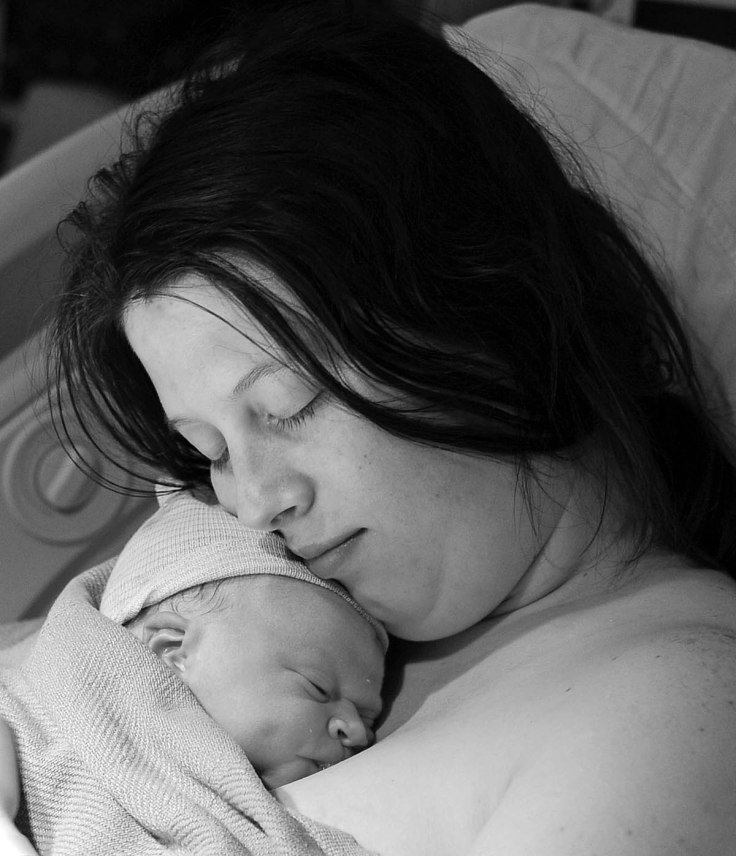
Years ago, in one of my group psychosocial sessions I had decided the group needed an introduction to ethical decision making, so I asked who could give me a definition of ethics. No one offered an answer. I asked again. I got a couple of answers that were not even remotely connected. This was not good, I had assumed (wrongly) I would have some foundation on which to begin a session.
With that in mind, I have decided to mention ethics to my little group of readers.
Ethics is defined as: 1) study of morality’s effect on conduct: the study of moral standards and how they affect conduct 2) a system of moral principles governing the appropriate conduct for a person or group.
Ethics is not a list of rules for what to do our not to do. It appears that most people like lists of rules, clear bright lines saying “don’t do this” or “do this” to be morally sound. It absolves them of making difficult moral choices. Leaders also like rules because it allows them micromanagement powers over their followers. Rules are the hallmark of the world’s mono-theistic religions, even when their founders apparently opposed such rules. Jesus was very clear in his denunciation of the rule makers in favor of an ethics based on “love thy neighbor as thyself”; however, the first thing his cadre of disciples did once he was gone, was to start imposing a list of rules. Continue reading “Of Ethics”
Note: I’ve been working on this for some time, but due to the nature of the content have been slow to publish it.
It has become a refrain from the left (and the media) to hear how Islam is a religion of peace and those who engage in violence have are not “real” Muslims. If one questions this premise the interesting moniker of Islamophobe is tied to the questioner. However, the question “Is Islam a religion of peace?” is legitimate and should be considered. However, the more I have looked into the issue, rather than get a simple answer I find it becomes ever more difficult to make simplistic answers.
To be a Muslim, a person simply has to agree there is only one God and Mohammad is his prophet. Though the mantra does not expressly say so, the assumption is that one accepts the Quran as the literal words of the one and only God and that the Quran supersedes all other older religious texts. All that is beyond question. The problem is that the Quran is not a book of systematic theology, nor is it a single narrative; but rather it is a book of various styles and subjects and content. Muslims say this style is because it is divine and its unique style is due to that fact. Secularist would respond that the lack of clarity is due to the fact that the Quran is nothing more than a mishmash of Persian, Arabic, Jewish and Christian ideas plagiarized by Mohammad and his immediate successors.
The divine or secular nature of the Quran is a matter of faith, but for this discussion the significance of this is that such a non-linier text is infinitely subject to interpretation. Of course issues of interpretation is true with all religions; but it seems monotheistic religions struggle with variations in interpretation more than most. I would suggest that this is because practitioners tend to be far more dogmatic about the unique rightness of their theology than other religions. In the case of Islam the initial schism in interpretation goes right back to the origins of the religion itself as if to make the point that there is not just one Islam a prima fascia case. Continue reading “Is Islam a Religion of Peace?”
In both Europe and the United States, issues of human migration are front and center.
My ancestors left the region that is now Denmark around two thousand years ago in search of a better life in a less harsh climate. They headed south. However, there was already an established culture in north-western Europe. The Celtic peoples populated most of the heart of Western Europe.
My ancestors were not there to assimilate or to work their way up in the established social system. They did not come prepared to pick crops and wash dishes. They came with ax and spear and shield to displace (kill) the locals. And they did. By the time the Romans arrived, the Celts were gone from northern Europe, they had been annihilated by my migrating ancestors.
The Romans held them up for several hundred years, but the southern march continued and did not stop till they had conquered nearly all of Western Europe from the Alps to Brittan to Rome and even parts of North Africa. Though they were not able to keep control of all that land and they grew into a number of distinct language and cultural groups, they never went “home”. Some of their descendants, the Angles and Saxons became the English and ruled the oceans for 200 years. Today, the richest country in Europe is named after one branch of these migrants (Germany); and, in the United States, the world’s super-power, the largest racial group is the descendants of those Nordic peoples. Whether they are called English, German, Dutch, Norwegian or Swedes, they are all children of those same migrants. Continue reading “Of Human Migration”
A couple of years ago I read an article that pretended to be advocating human rights, while in fact it was a story of moral cowardice passed off as courage.
The story was simple: a man who taught at a Catholic school came out as transgender. He did not resign, but rather waited to be fired and then promptly sued the Catholic school.
You might ask, why if I spend so much time writing about liberal values do I condemn rather than support this man and his cause. The answer is simple, this man, and CNN, have confused self-serving narcissism for moral courage, and that offends me.
Moral courage is the willingness to stand for right, without personal benefit but at a personal cost (think Gandhi). The case was not about being transgendered; it was about selfishness and self-absorption. This man taught at this school for decades, so he knew full well what the beliefs of the Catholic Church are in matters of sexuality. It is not a secret. He had been in the employ of a Catholic school and in his employment agreement, there were religious and moral expectations, as there were for all employees. There was no possible way he wasn’t informed of those expectations year after year. Continue reading “Of Narcissism Passed Off as Moral Courage”
TRUST IN MEDIA HITS ROCK BOTTOM screams the headline on Huffington Post. It goes on to say “Only 6 percent of people say they have a great deal of confidence in the press, about the same level of trust Americans have in Congress, according to a new survey released on Sunday.”
All I can do is wonder if the HuffPo editors have the slightest sense of self-awareness. After all their editorial position openly and aggressively presents its leftist bias.
The article goes on to say “Alongside the dire findings, the report found respondents valued accuracy above all else, with 85 percent of people saying it was extremely important to avoid errors in coverage. Timeliness and clarity followed closely, with 76 percent and 72 percent respectively saying those attributes were imperative among media sources.”
Yet at the same time they make no apologies about their own spin they put on each and every story. They don’t even try to be accurate or unbiased. Do you remember when they said they would only report Trump campaign news in the entertainment section?
So, HuffPo helps create a train wreck, then decry the carnage. How rich!


 The Cognitive Dissident
Recent Comments